When I was training to be a battered women’s advocate, my supervisor said something that really blew my mind:
“You can always assume one thing about your clients; and that is that they are doing their best. Always assume everyone is doing their best. And if they’re having a day where their best just isn’t that great, or their best doesn’t look like your best, you have to be okay with that.”
Any now whenever anyone in my life, either a friend or a client, frustrates me, disappoints me, or pisses me off, I just tell myself They are doing their best. Their best isn’t that great today, but I have days where my best isn’t that great either.
Oh boy if you’re mad about the US separating children from their parents, putting people in camps, and having a zero tolerance policy towards asylum seekers that has led to deliberate extensive cruelty as a futile deterrent wait until you hear about Australia.
…what’s going on in Australia?
Buddy! Strap in because there are two parts to this:
The past 100+ years of ripping kids from their families, racism, and attempted genocide
The past 20+ years of racism, but now island torture prisons! LEVEL UP!
Australia has had a long history of separating children from their parents. The government decided that mixed raced children of Indigenous Australians were not OK so literally kidnapped them and raised them to assimilate into white society and “breed the colour out.” This started about 1905 and ended about 1970. We call them the Stolen Generations. This has had long lasting negative effects on Indigenous Australians as it was a decades long attempt to absolutely destroy their culture and commit genocide. “But that was the past?” Surprise! By “ended in 1970″ I mean “the reasons in which we en masse tear children away from their families now has a different reason” and Indigenous children are now being taken away at even higher rates than during the stolen generations. Australia saw its Indigenous population, thought “how do we destroy their culture?” and when we were done thought “gee, how do we blame them for having all these issues in their communities?”
BUT THAT’S JUST THE BEGINNING!
Fast forward to now: Trump is using kids as political leverage to stop people from coming to the US right? Buddy he’s ripping Australia off. Scott Morrison, Minister for Immigration at the time once did that.
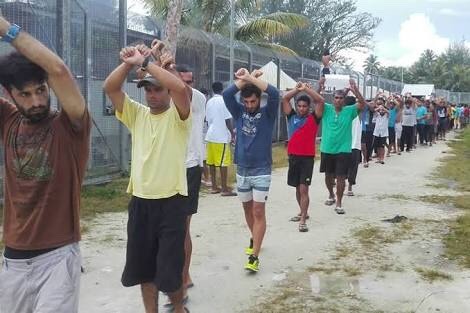
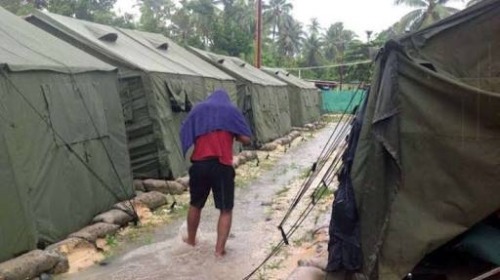
OK so for context: when people try to come to Australia via boat seeking asylum because they’re fleeing war/persecution we do either 2 things: turn them back and let them just… die elsewhere… Or we lock them up in detention centres on Manus/Nauru Island. That’s where we keep them indefinitely in bad conditions, give them dodgy medical care, smear them in the press, and react indifferently when they die from suicide/negligence/assault… and cover up sexual assaults from guards and the incredibly high rate of self harm and depression even in children. The entire idea is to be as cruel as possible so other people hear about it and go “geez, let’s not go to Australia. They’ll literally torture us before they give us a protective visa.” And when I say indefinitely I mean indefinitely. Some refugees have spent 5 years wasting away in these prisons. Some children have spent their entire life in these prisons. And the government openly admits that they’re genuine refugees. They’ve been rigorously vetted and known to be safe people with no intention of harming us but it’s the zero tolerance principle. You tried to come here via boat? You go jail but we call it “detention.”
The main line of attack against refugees: “they’re just coming here to take advantage of our welfare.” Oh no! It’ll cost the taxpayer money to subsidise a refugee to live in a safe country! So instead of having them “rip off” the taxpayer with a couple hundred a fortnight we’ll just lock them up on an island where it costs $1 million per person on average over the past 4 years and operational costs have wasted $5 billion in 4 years. Why help someone for barely enough money to survive when you can torture them and keep them imprisoned for several times more!
Scott Morrison, or Sco-Mo as we kids call them, loved the US’s Muslim Ban idea by the way. He said it was proof that the rest of the world was “catching up to Australia.” Yeah. Geez guys. What took you so long to be as bad as Australia?
Mandatory detention has had bipartisan support from the two major parties since its creation by the Keating government in 1992. We have been keeping people in prison for seeking asylum for 26 years.
We also don’t want to get rid of them. There was a deal under the Obama administration to take some of these refugees but this process has carried on into the Trump administration. He was livid the idea that he should uphold this deal because 1) OooOBaMaaaa!! 2) REFUGEES?? In America??? So that’s currently going nowhere. Meanwhile New Zealand, our good ally and close neighbour, has said “I’ll take some of them” and the current PM (Turnbull) has said no. His excuse? We have a deal with the US. We should see where that goes. It’s going nowhere. So he conveniently can just pretend his hands are tied and let refugees continue to be tortured and die under his care.
(And he hasn’t said it but I bet he’ll never let refugees settle in New Zealand because if they become NZ citizens they’ll have travel rights to come to Australia without the same visa restrictions as other countries AND THEN THE REFUGEES WOULD WIN).
So let’s top this all off with the icing on the cake: a phone call between Trump and Turnbull when Trump was getting acquainted with all the world leaders last year. Turnbull explained our zero tolerance refugee policy and the cruelty as a deterrent that is employed and Trump said “That is a good idea. We should do that too. You are worse than I am.”
“That is a good idea. We should do that too. You are worse than I am.”
Let that sink in.
And that’s where we’re up to now in modern history. See everyone likes to go to the obvious big example we have of the Nazis and their camps but the truth is… this never stopped. There are similar examples of this abhorrent behaviour happening right now and have been for decades. Governments have been putting people in camps and trying to destroy cultures, or ethnicities, or deny people safe havens from wars, and be utterly heartless and deliberately cruel since forever. This is the ongoing drive of conservatism: keep people out, keep people a certain way, and the current example in the US is just that bubbling over the horribly inescapable surface. We are deluded to think that this cruelty took a 70 year respite when WW2 ended and it’s taken this long to get this strong.
The world has always been racist. Trump just doesn’t bother to filter it. And Australia just wants to keep it on an island so no one can see it.
Also, that Australia/New Zealand immigration deal? Australia has slowly been taking away the rights of New Zealanders resident in Australia – including children born in Australia to Kiwi parents – and making it nigh-impossible for them to actually get Australian citizenship, basically all because of paranoia that brown people will move from NZ to Australia. They’re aggressively deporting Māori and Pasifika New Zealanders, even those who may have come as small children and have no memory of New Zealand, both for things like being convicted of any crime and for things like “being of bad character”. Or, rather, they don’t deport them. They put them in offshore prison camps and tell them they can’t leave until they agree to leave Australia. (It’s not that these things don’t affect Pākehā NZers, it’s that we’re not the real targets.)
During our election campaign last year, the Deputy PM of Australia openly said that if Labour were elected to government it would be bad for Australia because they would encourage refugees to try and get to Australia hoping to be taken by New Zealand. They have an island fortress mentality Trump hasn’t even started to achieve.
And the thing about Australia – there isn’t the coverage that America has. Not even in our own country. It’s hard to find out what’s happening – visas for journalists to visit Nauru are prohibitively expensive – and … no one really cares. It’s so entrenched that it’s the status quo, and when I called my MP and senators to go, WTF guys? the response was like, “…oh yeah, thanks for your feelings, cool, bye”.
I honestly tune out a lot of the coverage because, at this point, I don’t know what to do. Both major parties support these policies, so I vote for the Greens. I contacted my representatives. I walked in protest marches. I donate to the Asylum Seeker Resource Centre and other charities.
So I guess, if I have advice for Americans, it’s to not let this become the status quo. Because you’ll wake up one day and it will have always been like this.
Holy shit, I knew it was bad here but I didn’t know it was that bad. Why don’t we hear about the depth of these things in Australia, how can they keep us so in the dark?
What you can do to help the Human Rights crisis in Australia:
If you are Australian:
Keep up to date and informed. The only major media outlets that routinely reports on this issue is The Guardian Australia. They are free online but consider donating if you can to keep it free access.
The Saturday Paper is another independent online news source that reports on this.
Follow or sign up to GetUp!. GetUp! is Australia’s largest progressive grassroots activist group and has lots of campaigns and information about this issue and many others, such as climate change, economic justice, and democratic and civil rights. Donate if you can, sign their peritions, follow their campaigns.
CONTACT YOUR MPs AND SENATORS. This is really important, especially if they are supporters of the policy. Keep public pressure on then, make them feel it. Letter templates are good, but personally written letters/emails are better. Call them if you can. And respond to them with your displeasure if they send you a cookie cutter response of their party’s policy on “stopping the boats”.
SHOW UP TO PROTESTS. Another really important one. Even if you just show up and march, your physical presence counts. They’re not as scary as it might seem.
DONATE. I really cannot stress this enough, if you can afford it, donate.
WHO SHOULD I DONATE TO?
Asylum Seeker Resource Centre (ASRC) provides financial and legal support, as well as counseling and community services, to refugees already in Australia.
Refugee Action Coalition (RAC) are a group of state-based advocacy groups that support refugees in Australia and advocate for those trapped in Australia’s offshore detention regime (link is for the Sydney group but contains links to other states).
GetUp! is one of the best to donate to for political action. They have options to donate to the organisation as a whole, or to specific campaigns.
If you are a member of the Australian Labor Party, please do what you can to bring up this issue and pressure the party leadership to change its policy.
If you are NOT Australian
Do what you can to contact your government and representatives to bring up this issue and pressure Australia to change their policy.
SPREAD THIS POST AND OTHERS LIKE IT. Australians do not have the numbers and influence on his site that Americans and British have. Please spread this information and resources so that other Australians might see it and feel like they have some power to change it or even know about it.
If you are a New Zealander: please continue to keep the pressure on your government to call out Australia and offer to take refugees.
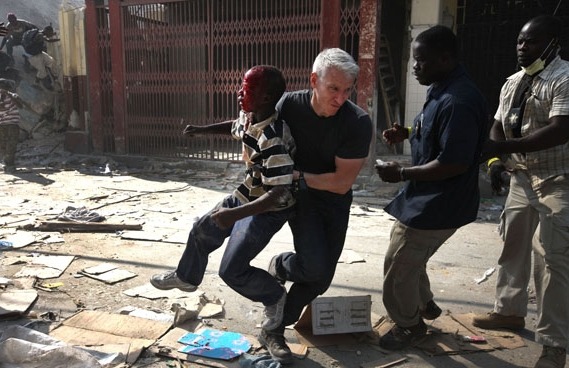
Anderson Cooper saving a boy in Haiti during a shooting. A slab of concrete was dropped of the boys head.
Anderson fucking Cooper, everyone.
Some journalists like to be strictly observers. they don’t intervene, they don’t participate. they just document what they see, even if what they see is terrible. But the way I see it, journalists don’t exist in a vacuum. They are human beings, living and working in a very human environment. And that humanity is essential in relating to their stories. When you lose your humanity, you lose any kind of journalistic integrity you have left.
#nevernotreblog
this is the guy who found out one of his ancestors was killed by one of his slaves and was like “he had it coming”
Every now and then I run across this post, and every time I do, I feel the need to say something, especially since @flowers-without-reason felt the need to speak on behalf of a massive career field that he/she is not part of.
It’s really easy as a bystander to pass judgment on how/why journalists do things. I will not presume to speak on behalf of all journalists, but I was one and I can explain the “strictly observer” thing from at least one perspective.
You see, any time you are not actively observing – ie, taking photos/videos/recording observations – you are missing the story. When you miss the story, you miss the opportunity to tell the story.
Since we live in the digital age, it’s easy to forget that 1) we didn’t always have the ability to record, transmit, and view information across the globe instantaneously, and 2) not everyone has access to that utility now.
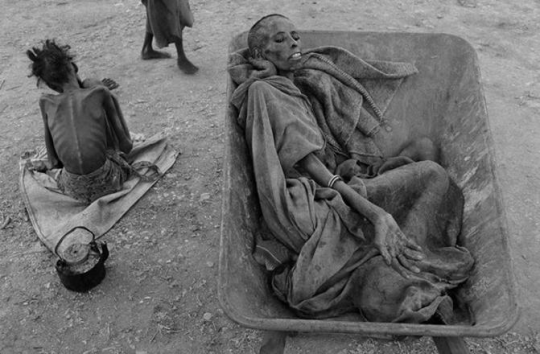
In 1992, James Nachtwey took this photo:
Because he took this photo (among the other equally horrifying and heartbreaking images he brought back from Somalia) and it was published to a large Western audience in the New York Times, The Red Cross received the largest influx of donor aid since WWII, and they were able to save 1.5 million people. Representatives from The Red Cross have directly cited the Nachtwey photos as inspiring that flood of help.
These photos helped save more than a million lives.
It is easy as a bystander – someone who isn’t a journalist, who probably hasn’t been in a war or famine zone – to make sweeping judgments about what journalists should or shouldn’t be doing.
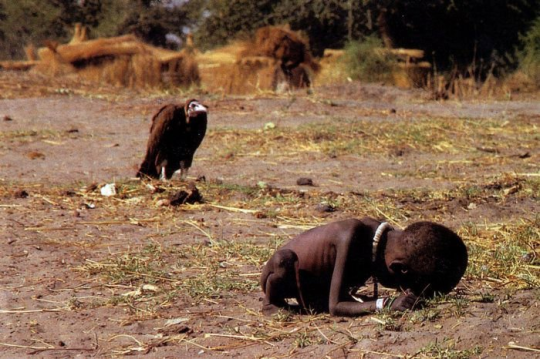
Like this photo from the Sudan by Kevin Carter:
Hundreds of people contacted the paper questioning whether the little girl had survived to which the paper responded through an unusual editor’s note saying that the girl garnered enough strength to walk away from the vulture but her ultimate fate was not known. It was a rule for the journalists in Sudan not to touch victims of the famine, to avoid the risk of transmitting diseases. Carter though came under a lot of criticism for not assisting the girl. The St. Petersburg Times wrote this about him: “The man adjusting his lens to take just the right frame of her suffering might just as well be a predator, another vulture on the scene.”
He chased the vulture away after taking this photo. Note that journalists in the Sudan were not supposed to touch the famine victims to avoid the risk of transmitting disease.
You’ll be pleased to know he committed suicide in 1994, shortly after winning a Pulitzer for this photo, leaving behind a note that talked about the horrors he saw and photographed.
“I am depressed … without phone … money for rent … money for child support … money for debts … money!!! … I am haunted by the vivid memories of killings and corpses and anger and pain … of starving or wounded children, of trigger-happy madmen, often police, of killer executioners…I have gone to join Ken if I am that lucky.”
Now that we just blissfully assume everyone has both a smartphone and access to unrestricted internet, I guess it’s safe to feel critical of the people still putting themselves in the trenches to tell these stories.
These people told stories, and they are continuing to tell stories, that need to be told. We talk about silencing and rewriting history, then criticize the people trying to document it.
When people talk about immigration and refugees, you can show them this picture of the actual human beings sent to their deaths when we turned away the St Louis:
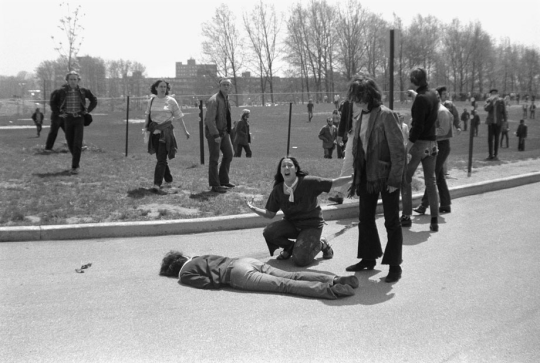
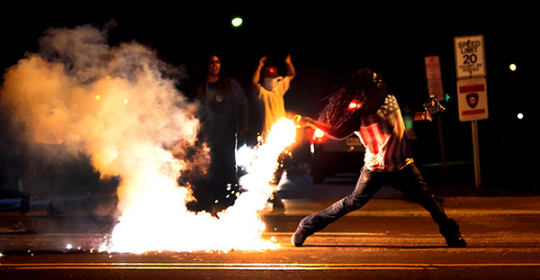
If you want to talk about the violent militarization of law enforcement, you can show someone this photo from the Kent State shootings:
Or maybe the horrific futility of war:
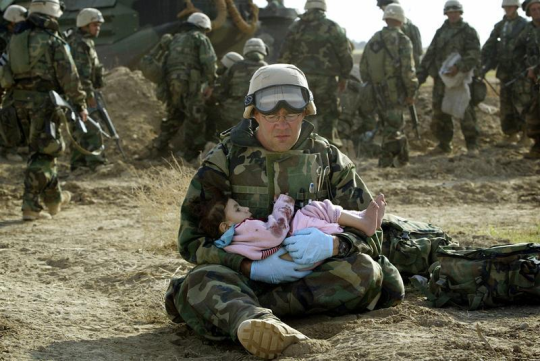
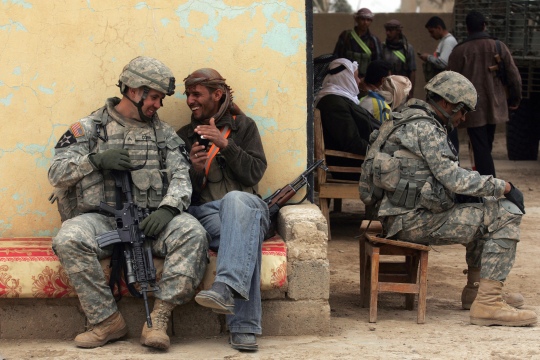
Or maybe the impossible way we connect with each other:
Or you want to showcase dignity:
And bravery:
I won’t disagree that “when you lose your humanity, you lose your journalistic integrity,” but I will disagree that intervention is a key component to maintaining journalistic integrity.
Journalistic integrity is telling an authentic story.
The social justice corner of Tumblr often discusses what one person can do to make a difference in the world, yet posts like this get 700,000+ reblogs crapping all over one of those things a single person can do to make a difference.
Net neutrality in the US is on the chopping block and states are debating the ethics of lying in history text books. I’d dare say that the journalists who are out there documenting the world as it exists are doing a job that is as important today as it was in WWII when a single photo from Iwo Jima helped turn the tide of the Pacific campaign.
We’re in a time and place where filming police officers in public is an arrestable offense. So yeah, documenting is an act of intervention and resistance. It’s you saying, “I am not going to let anything stop me from telling the truth.”















 marlowfication